Healthcare Attribution Is Broken. Here's What Actually Works.
 Russell Reid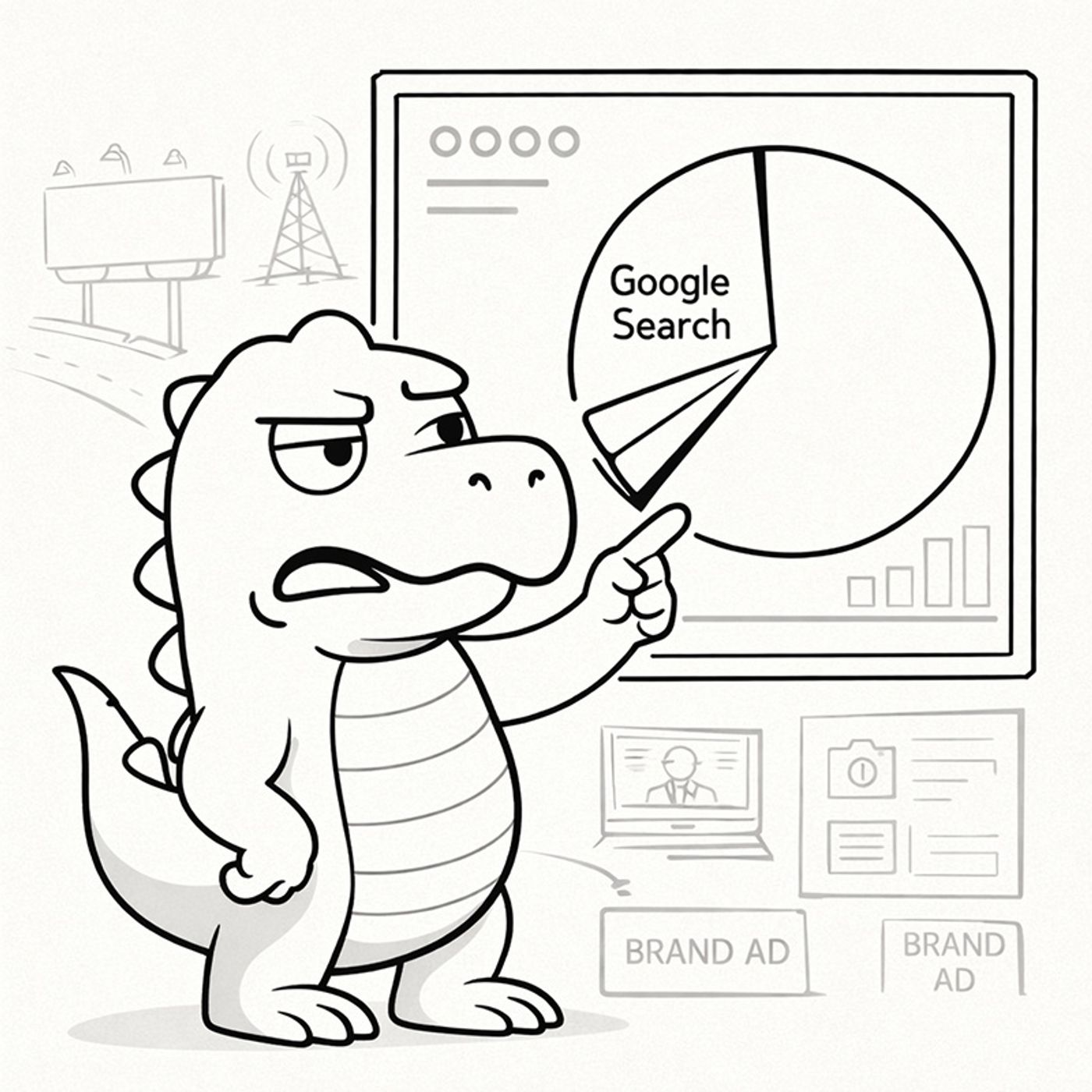
Most healthcare marketing leaders cannot tell you, with any real precision, which marketing dollars produced which patients. They have dashboards. They have reports. They have campaign data flowing in from half a dozen platforms. What they do not have is a defensible answer when finance asks why the system should keep spending $4 million a year on digital marketing.
This is not a failure of effort. It is a failure of measurement.
Sixty-three percent of healthcare marketers say their attribution models fail to capture ROI, according to analysis from ab+a Advertising citing Deloitte data. Fifty-two percent of healthcare executives report low confidence in their marketing ROI data, per Gartner. Meanwhile, marketing budgets as a share of company revenue dropped from 9.1% to 7.7% between 2023 and 2024, per the Gartner CMO Spend Survey, and have stayed flat at that level into 2025. Finance teams are asking harder questions. The tools for answering them are thinner than ever.
Healthcare marketing has an attribution problem. It is also a performance problem, a budget problem, and a career problem. The good news is that the teams that solve it first will earn disproportionate authority, credibility, and growth. The bad news is that most are nowhere close.
Why healthcare attribution is harder than anyone admits
Start with the patient journey. In retail, a purchase happens in minutes. In healthcare, it happens over weeks or months. Research consistently shows that healthcare decisions involve multiple touchpoints across a long consideration window. Journey length varies by care type: hours for urgent care, weeks for primary care selection, up to 21 months for an elective joint replacement, according to PMC-indexed longitudinal research.
Then there is the phone. Healthcare is the last industry on earth where the telephone is still the dominant conversion channel. A 2024 Healthgrades study found about 85% of consumers still schedule doctor appointments by phone, despite 80% preferring providers who offer online scheduling. Phone calls convert at 25% to 40%. Online forms convert at roughly 2%, per InfluxMD industry analysis. Without call tracking connected to campaign data, the majority of actual patient conversions never touch the attribution model.
The real conversion event is also invisible in another way. A form fill is not a patient. A booked appointment is not revenue. A marketing team optimizing for bookings is optimizing for the wrong thing. A team optimizing for attended appointments, with that data flowing back from the EHR, sees the real picture.
Data silos make the picture harder to assemble. Ad performance lives in ad platforms. Web behavior lives in analytics tools. Patient outcomes live in the EHR. None of those systems were designed to talk to each other. Epic is the clinical record at 72% of surveyed healthcare organizations, per Greystone.Net's Wave 7 research. It was built for doctors and documentation, not marketers and measurement.
Privacy rules add another constraint. The 2022 HHS guidance on tracking technologies set off a wave of remediation, lawsuits, and removed analytics across the industry. The June 2024 AHA court ruling rolled back the most aggressive interpretations for unauthenticated pages, and HHS withdrew its appeal. Authenticated pages remain covered. General-purpose analytics platforms still refuse to sign a BAA. The rules changed. Most systems did not.
Cross-device tracking is nearly impossible. A patient researches on a phone, reads on a tablet, books from a work computer. Standard analytics sees three users. The tools that used to stitch them together, device fingerprinting, identity graphs, third-party cookies, are either restricted under HIPAA or disappearing from the open web.
And then there is the new blind spot. AI-generated answers now appear in a growing share of informational health queries, per industry analysis from Anzolo Medical. A patient who discovers a health system through ChatGPT or a Google AI Overview lands on the site as "direct traffic." The marketing channel that actually drove the visit is invisible. It will be one of the biggest measurement gaps of the next two years.
Why the default model is the wrong one
Most health systems use last-click attribution because it is what the free analytics tool hands them by default. It is also the most misleading option for healthcare.
Last-click gives 100% of the credit to the final touchpoint before conversion. In healthcare, that final touchpoint is almost always branded search. A patient who saw three awareness ads, read two blog posts, watched a physician video, and finally typed the health system's name into Google gets counted as a "Google search" conversion. The entire upstream investment that produced the search looks like zero ROI.
ab+a Advertising documented exactly this pattern at one regional health system. The last-click dashboard showed 80% of conversions credited to search. Brand campaigns looked dispensable. They were not dispensable. They were producing the searches. A geo-lift test told the real story: +30% search demand, +15% referral inquiries, and +22% patient portal activations in the treatment markets versus the control.
This is the pattern. Last-click rewards the channel closest to the door and hides the channels that brought the patient to the neighborhood.
Other models have their own issues. First-touch ignores the long consideration journey. Linear treats a two-second blog skim the same as a ten-minute appointment page visit. Time-decay undervalues the awareness that started the journey months earlier. Data-driven attribution in GA4 sounds sophisticated, but it requires hundreds of conversions per month to work, it is difficult to explain to a board, and it fails entirely when half of the touchpoints are not being measured in the first place.
As Patrick Soto, Managing Partner at ab+a Advertising, frames it: "Attribution in healthcare isn't broken, it's just asking the wrong question. Instead of 'what channel gets credit,' the question should be 'what system of brand, access, and referral signals moved the margin?'"
A framework that actually works
The answer is triangulation. Three measurement layers, used together, produce the kind of confidence healthcare marketing teams need.
The first layer is position-based multi-touch attribution, typically U-shaped (40% first, 40% last, 20% middle) or W-shaped. This is the day-to-day tactical model. It weights both the initial awareness touch and the final conversion trigger, which matches how healthcare journeys actually work.
The second layer is marketing mix modeling. MMM uses aggregate data, so it is inherently privacy-safe. It captures offline channels like billboards, radio, and sponsorships that digital attribution cannot see. Bain research cited by ab+a Advertising finds that organizations using econometric modeling achieve up to 15% stronger ROI on marketing spend. This is the quarterly strategic layer. It answers the question finance actually asks: "If we cut digital spend by 20% and moved it to brand, what would happen to patient volume?"
The third layer is incrementality testing, usually geo-lift experiments. Run a campaign in treatment markets and matched control markets. Measure the causal impact. No user-level tracking required. This is how the brand-campaign-versus-search question gets settled.
Three supplements make the system complete. Patient surveys, asking new patients how they heard about the health system, provide qualitative ground truth. Call tracking with AI conversation intelligence captures the phone conversions that digital attribution misses. EHR integration closes the loop, connecting marketing spend to attended appointments and collected revenue.
One practical rule: run more than one model. When they agree, confidence is high. When they disagree, there is something worth investigating. A marketing leader who can walk into a board meeting with three independent measurement systems pointing the same direction is operating at a different level than one waving a single dashboard.
The maturity ladder
Most health systems sit at Level 1 or Level 2 of the attribution maturity curve. Very few reach Level 4 or 5.
Level 1, Foundational. UTM parameters, a general analytics tool, basic call tracking. Last-click only. Reports arrive late and get questioned often.
Level 2, Connected. CRM integrated with web data. Dynamic number insertion for call tracking. A HIPAA-aligned analytics platform in place of the general-purpose tool. Position-based attribution replaces last-click. Service-line dashboards exist.
Level 3, Integrated. EHR and PMS data flow back into marketing reporting. AI-scored call outcomes. Server-side conversion tracking via a HIPAA-aligned CDP. Campaigns optimize for attended appointments, not bookings. Marketing can answer the revenue question by service line.
Level 4, Advanced. Marketing mix modeling runs quarterly. Incrementality tests validate major investments. Board-ready reporting connects spend to contribution margin. Budget moves across channels based on evidence, not habit.
Level 5, Predictive. Patient lifetime value models forecast revenue by service line. Budget reallocates automatically against performance. AI-driven optimization runs the tactical layer while the team runs the strategic one.
The gap from Level 1 to Level 3 is where most of the ROI lives. The gap from Level 3 to Level 5 is where competitive advantage lives.
The attribution gap is a competitive opportunity
The difficulty of healthcare attribution is precisely what makes it a moat. The teams that build real measurement capability will earn budget authority, executive credibility, and market share. The ones that do not will keep losing budget to channels and competitors that can prove their work.
Attribution in healthcare will never match the pixel-perfect precision of e-commerce. That is not the goal. The goal is enough measurement confidence to make better decisions than the health system across town. Most cannot do that today.
The ones that figure it out will define the next decade of healthcare marketing. The rest will keep explaining to finance why last quarter's spend was worth it.
See what your attribution is missing.
LightTrail gives healthcare marketing teams full-context analytics within a HIPAA-aligned architecture. Patient journey visibility. Campaign attribution. Authenticated user tracking. No blind spots.
Book a 20-minute walkthrough at lighttrail.com
Sources
ab+a Advertising. "Why Attribution Models in Healthcare Fail, and What to Do About It." October 2025. https://abaadvertising.com/industry-insights/why-attribution-models-in-healthcare-fail-and-what-to-do-about-it/
Anzolo Medical. "Healthcare Marketing Attribution in 2026: How Medical Practices Can Track ROI When Traditional Analytics Fail." January 2026. https://business.anzolomed.com/healthcare-marketing-attribution-in-2026-how-medical-practices-can-track-roi-when-traditional-analytics-fail/
Gartner. "Gartner CMO Survey Reveals Marketing Budgets Have Dropped to 7.7% of Overall Company Revenue in 2024." Press release, May 13, 2024. https://www.gartner.com/en/newsroom/press-releases/2024-05-13-gartner-cmo-survey-reveals-marketing-budgets-have-dropped-to-seven-point-seven-percent-of-overall-company-revenue-in-2024
Greystone.Net. Wave 7 Healthcare Digital Marketing Research.
Healthgrades. "How Online Appointment Scheduling Helps Patients and Medical Staff." 2025. https://b2b.healthgrades.com/insights/blog/online-appointment-scheduling-helps-staff-and-patients/
InfluxMD. "Medical Practice Lead Conversion Rates Reveal Massive Opportunities for Improvement." https://www.influxmd.com/blog/medical-practice-lead-conversion-rates-reveal-massive-opportunities-for-improvement